Showing posts with label Art. Show all posts

November 22, 2015

Push > Start


The Art of Video Games.

Push > Start is a large art book showcasing a wide time span of video games. There are a total of 215 games showcased, starting way back with OXO (1952) and finishing with Halo 5 (2015). Since it covers over sixty years, there are a few games that aren't covered (*gasp*).


However, the focus isn't on the games themselves, but rather the art and style presented within each one. Each game is showcased by only one or two screenshots. That's it. The only information provided on each game is the platforms it was released for, year, developer, and composer. The only block text present is a short introduction at the beginning of each chapter and some philosophical explication at the end. The chapters are separated as follows:

  • Early Games
  • Arcades
  • 8-Bit
  • 16-Bit
  • 3D
  • HD
  • Video Game Platforms
  • The Art of Video Games

All in all, it's a nice simple snapshot of each era. Clearly, it's difficult to make a statement like, "I'm going to narrow down the entire 8-Bit era to fifty games." But for the most part, the games chosen were pretty safe.


As the book nears the more recent time periods, though, it becomes much more subjective. Games can be a cash cow, and publishers know that. It is not (and has not been) a niche market for a large number of years. It makes it way harder to determine which games have blood, sweat and tears put into them to make them "artistic" and which ones have enough money/manpower/marketing to give it the illusion of being so. Or maybe some of them are anyway. Who can say? Nobody, because it's not a fact, it's an opinion, so quit your whining. Everyone likes their own thing, and there's way too much to be able to see everything.


The philosophy stuff is a little tiring, and thankfully there's not too much. People trying to quantify things that can't (and shouldn't) be quantified into "fact." Here's a taste:

"A game is art because it adds a new element to the "vocabulary" of design. One day, the artists who created this pure, controlled image space may well be mentioned in the same breath as Michelangelo or Leonardo."

The difference is, Miyamoto wasn't some hipster sitting at home trying to avant-garde the crap out of the industry/society. He went to school, got a job, and was tasked by his superiors to make a product that would sell, and so he based it off of existing popular things. Yes, he was innovative. Yes, he was smart. Yes, he had skill. But he wasn't sitting down saying to himself, "God, I'm going to make such an artistic statement out of this thing." But he put in real, full effort, and it turned out great. So we appreciate it. End of story.


The book itself is gorgeous and high quality, not to mention huge! It measures approximately 11" x 11", and weighs over six pounds. The cover is embossed with a checked pattern and includes an obi strip. The organization is great, as the index is up front for easy navigation.


There is also a vinyl record included in the back with generic "big game" music remixes on it (think Super Mario Bros., Castlevania, Street Fighter, Mega Man 2, Tetris, etc.). Not a huge deal, and the remixes are fairly lackluster. I would guess that they did remixes since putting the source music on there would cost way too much money. But with a remix they can argue artistic license or whatever.


It's definitely an "artsy" art book rather than a diagnosis of the art of video games. Worth it? Well, it looks really nice. Not any huge surprises, but aesthetically they nailed it. So if that's what you're going for, spend away.

May 11, 2014

My Famicase Exhibition - 2014


10 years of creativity.

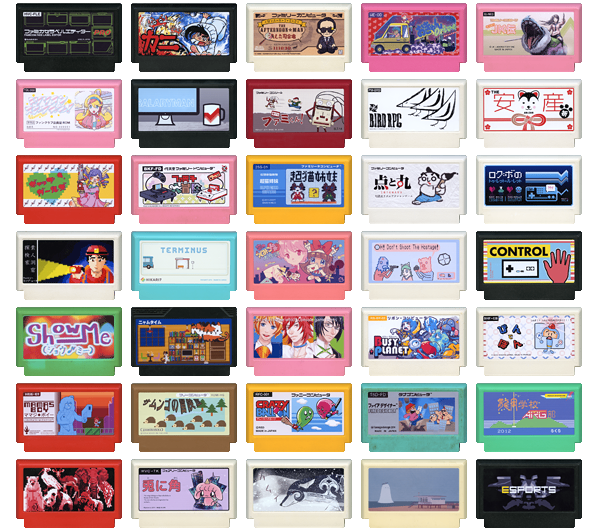
My Famicase Exhibition is a Famicom-based art exhibit held in Tokyo. The first one was in 2005, meaning that this is the tenth consecutive year. The premise is simple: design your own Famicom label for a fake game. Work can be created by teams or individuals, but only one submission per entrant is allowed.


This is such a great idea. And the fact that you only don't actually have to create the game itself is pretty nice. The only limitation is your own creativity. Entrants also come up with descriptions, characters, gameplay, and backstories for their fake games. Some of the entries are serious in nature, others rather humorous.


Check out the link at the top for the whole exhibit.

The exhibition is held in METEOR, a store in Tokyo specializing in retro gaming. It's not the biggest place in the world, but there's a lot of neat stuff inside (including a lot of those ridiculously expensive The King of Games clothing items). I am quite content with checking out submissions from here, but if you're super curious, feel free to take a virtual tour.


There's a wide range of submissions every year. Some entrants aim to replicate a certain style, others pay very obvious homages to existing carts, and others choose to be completely original. It's all good stuff, and the only rule is that you can't use existing copyrighted material (characters, etc.).


Every year has a lot of great art, so I would highly recommend checking out submissions from 2013, 2012, 2011, 2010, 2009, 2008, 2007, 2006, and 2005.

When I was first exposed to Japanese retro cartridges all those years ago, my initial feeling was straight-up jealously. Why the heck are we stuck with all this boring gray stuff? And it hasn't always been that way. The Nintendo of America series Game & Watch boxes were way more colorful and artistic than their Japanese counterparts (although I still really like the Japanese boxes). All I know is, I'm envious of all the cool Famicom carts, while I'm stuck here with my dull gray monotony.

Wow. It is so exciting. I can hardly contain this bottomless well of energy.

Celebrating video games is cool! Nintendo is cool! Combining the two well is really cool!

January 24, 2014

Drew: The Man Behind the Poster


Brilliant.

Drew: The Man Behind the Poster is an in-depth look at Drew Struzan's career and life. His work is timeless, and has impacted more people than almost any other modern artist. So many people are familiar with his work, despite not knowing his name. Here's a few to get you started:


The documentary follows Drew's beginnings as a starving artist to his slow but sure crawl to being one of the most beloved artists in the world. I can't recommend this film enough.

What really makes it work is Drew's willingness to be interviewed. I was afraid that this film would turn into a simple montage of people saying, "Oh, man, I love that poster!" Thankfully, that stuff takes a far backseat to Drew himself talking about his life, experiences, and lessons learned.

Yes, there are interviews from famous actors and others in the film industry, but they're people that genuinely care about Drew and his paintings. They have a lot of insight and sincere love for Drew's work, and it really comes through. There's no needless filler.


Drew seems like a very private, truthful, and direct kind of guy. He's very trusting (to a fault), and just loves his work. It doesn't matter what subject he's painting, or if he's being paid. He'd do it regardless. His passion for the art is inspiring. Hell, after watching, I wanted to go learn how to paint.

His wife Dylan also provides a lot of insight on their lives and struggles to be in a non-threatening situation life-wise. They're both so candid about everything, it's almost impossible to stop watching. Drew discusses a lot of the stories behind the posters, and the ins and outs of his career.

It's also great to see this in HD, because they show a lot of spectacular close-ups of Drew's work. It's something that can't be replicated through a computer monitor. It really shows the intricate details, color, and textures of the work, and makes the paintings just spring to life.


The last parts of the documentary talk about how most movie posters were shifted from actual artists to computer enthusiasts who could whip something up in Photoshop over a weekend. It's really disheartening to hear not only Drew, but other brilliant movie poster artists tell how they've been cast aside, merely to cut costs.

And it's true. Movie posters, which are normally one of the first things you see (and are supposed to get you to want to see the movie), look so boring and flavorless. Everything looks like everything else. It's just another thing that's fallen to the Hollywood crap of "if you do something once, do it a billion times. Even though it never worked in the first place, keep on doing it, because doing something new requires effort. Don't give people any other option, so they'll be forced into accepting it."

Drew is also shown going to Comic-Con in San Diego in 2010, and the overwhelming response he received (including an Inkpot Award). He is truly speechless, astounded that people came from so far "just to see little old me."


The fact that Drew is still alive also makes the documentary work very well. Too often a project is started after a notable figure has died, because it took their death to get people interested. The creators can't ask questions, because obviously they'd get no answer. Everything has to be constructed from archival material, which is too bad, because these people sat for years unaware that myriads of people still adore their work.

Bottom line? Watch it. Watch it now. It's streaming on Netflix and Amazon. Or you could just go buy it. You won't be disappointed, and to really see how much Drew accomplished over the years is incredible.

The credits make such an impact too. In order to show the posters Drew painted over the years, the filmmakers have to show copyright info and such. The absolutely gargantuan list of work, listed one after another, is mind-boggling. I was completely blown away.
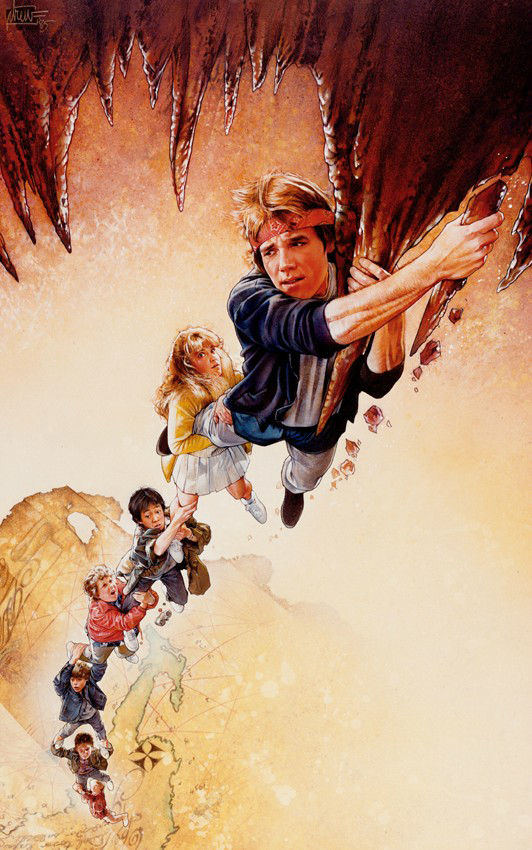
If you decide not to watch the documentary, your loss. But you at least owe it to yourself to check out his website. All the movie stuff is under the Illustrated Works. The art for art's sake is under Studio Works. He also has not one, but two books available. Both are filled with artwork and insights. Truly a master of the art.

Man! If only I had $200,000!