Showing posts with label Movies. Show all posts

May 18, 2014

Godzilla - 2014


Overall disappointment.

So I saw the new Godzilla on opening day. And while it wasn't awful by any means, it wasn't anything special either. Spoilers ahead.

The opening sequence had promise, and I was very intrigued. The music fit well, and felt like an homage to '50s monster movies. Then we got introduced to our main characters. I was on board for all that too. As soon as that "15 YEARS LATER" popped up, unfortunately, the rest of the film flatlined.

Most of the major elements went through the motions of what they were "expected" to be, but if you took a step back and really thought about it, you would see that there was no substance to any of it whatsoever. It's too bad, because I had some hope after seeing director Gareth Edwards' Monsters (2010). But the bigger you get, the less control you have.

The characters were incredibly one-dimensional. The only one with attempted development was Ford (Aaron Taylor-Johnson), but it was forced and had a feeling of afterthought all over it. Ford's wife, Sandra (Elizabeth Olsen), didn't contribute anything. In every single scene she appeared in, she was either crying or making out (except the last one, where she did both simultaneously). If she had died at the end (which honestly, she would have due to the events happening all around her), then it would have given Ford's struggle some emotional impact. But instead they do the thing where everybody lives happily ever after. There's no feeling of consequence, because we only really see one person die. Joe's (Bryan Cranston) death doesn't really have a big impact though, because Ford hasn't seen him for a very long time, and has since distanced himself. He really does nothing except show frustration at his father's actions. Joe's death was meant to mean something, but the fact that we didn't really know anything about him other than "he works hard and is slightly crazy," and since Ford is annoyed with him too, means that his death is inconsequential. It was kind of a mercy that he died so early on though, because every scene he was in was pretty much the same as the one before it. I doubt it would have changed.

Serizawa (Ken Watanabe) was basically the haiku machine in the corner that someone kept plunking quarters into. He did nothing the entire film except stand off to the side, wait until the actual conversation was over, then mutter some "deep" statement with a furrowed brow. Because heaven forbid that a Japanese person is the main focus in an iconic Japanese, Japanese-created, culturally relevant Japanese film series. This is an American movie, damn it, and an American studio wouldn't be so foolish as to put the focus on some *shudder* non-American *gasp* non-White person! Give me a break. And what was the purpose of Serizawa's fellow scientist, Vivienne Graham (Sally Hawkins)? Whenever she spoke, all she did was agree with one of Serizawa's statements. These are not secondary characters, they are the main ones, so please have them actually contribute.

Then we get to Ford, our main human character. We understand that Ford is a good guy, he's all about doing the right thing and all that. We establish that pretty early. But for all the kaiju and counter-kaiju events happening (all over the country, mind you), we're expected to accept that Ford somehow manages to be at absolutely all of them, no question. Not to mention that he ends up saving the day at absolutely all of them, no question. It was just too much, and again, since there's no development past "he's a good guy," there's nothing else for him to do. Even the painfully implemented "character development" fell flat. The scene where he helps the Japanese child find his parents immediately comes to mind. It didn't help that throughout the whole thing, the kid couldn't care less who Ford was or what he was doing. Then the kid just happens to wander off into a crowd of thousands of people and walk right into his parents a full fifty feet away, despite them losing him so long ago and over so far a distance. And Ford just stands off in the distance with a goofy smirk and his hands on his hips. "What a good guy Ford is," we're supposed to say (again). "And how great of him, a full-blooded goddamn American, helping out those poor helpless foreigners. Man, I love America. We are so damn great."

That whole scene was so painfully shoehorned in. And of course, Ford has not one, but two moments where he "connects" with the monsters, their eyes meeting and unspoken messages passed between them. Why? Why why why why why? The egg sequence presented some questions as well. Why did none of the other soldiers decide that they should at least report a huge nest of hundreds of eggs ready to hatch? Well, because Ford is a good guy, and he'll solve it by himself, that's why.

The monsters themselves had no clear consistency or motivations other than the MUTOs wanting to mate (which again, was just an assumption). I guess I can understand that, but what about the rest? There were too many assumptions made by pretty much everybody, without any clear evidence, that just happened to be correct by pure chance. At no point did anybody stop and say, "Please explain how you came to that conclusion." And if I had been there, that statement would have come out plenty of times. Some general questions:

  1. If the MUTOs seek out radiation to eat, then why didn't Godzilla at any point?
  2. If all monster from that period feed on radiation, then why didn't Godzilla eat the MUTOs?
  3. Since it shows the MUTOs literally eating nuclear bombs, how did they consume radiation millions of years ago? Did they literally eat radioactive rocks?
  4. Wouldn't all the monsters be emanating radiation like crazy? They were even using Geiger counters when they found the two pods, so that answer would be yes.
  5. Wouldn't everybody that got near any of the monsters suffer from radiation sickness/poisoning?
  6. Wouldn't the battlegrounds be a radioactive hotspot, since the monsters are running into everything and bleeding all over the place?
  7. Why did Godzilla decide to leave after defeating the MUTOs? Because Serizawa said he would?
  8. After the MUTOs were gone, why didn't Godzilla then live normally, seeking out nuclear devices of his own?
  9. Didn't Godzilla contribute to the deaths and injuries of many, many people? Why is everyone cheering him on at the end?
  10. If all it takes to counter the MUTO's EMP is rubbing some wires together, then wouldn't everybody be able to just re-start their cars and all other electronic devices?
  11. Why didn't anyone ever find any other evidence of creatures from that time period?
  12. Are there more of these creatures from millions of years ago still walking around the bottom of the ocean? Would they react and follow the three on the surface? Especially since one is calling out specifically to find others?
  13. Why do they assume the MUTO species and Godzilla's species are natural enemies? The skeleton and pods could have multiple explanations. The MUTO species could found the dead Godzilla skeleton years after it had died for all we know.
  14. How did the MUTOs know exact tactically strategic points and times to set off their EMPs?
  15. Why would the MUTOs develop an EMP defense mechanism in a time millions upon millions of years before electronic devices would even present a threat?
  16. The EMP only has a limited range. Why not airlift the bombs far, far away from the MUTOs (which you are determining the pathway they choose) and therefore their EMP as well?
  17. Why didn't Godzilla use his atomic breath sooner if it's so effective?
  18. How the hell did Godzilla and the first MUTO stay hidden, even while actively being sought by a team of people whose specific job it was to find them with the most advanced levels of technology?
  19. If Serizawa had spent decades trying to find out everything about the kaiju, then wouldn't he make looking through every person's research that worked at the nuclear power plant a top priority? Joe's floppy disks would be one of the first things he'd find, since they were conveniently sitting right on top of the freaking desk.
  20. What message is Serizawa trying to convey by giving the head military guy his father's watch?
  21. Why did Serizawa make a "profound" statement about how, "man can never win the fight against nature," when he himself has been trying to kill Godzilla for the past fifty years?
  22. If you are guiding monsters on a certain path (across the whole world), wouldn't you want to make damn sure they didn't even come close to the one thing you plan to use against them?
  23. How can all of the monsters be absolutely silent and absolutely still apparently whenever they want?
  24. If these monsters have been active since the '50s (and in plain sight), then why didn't anyone at any point know/see/hear/report/record anything about them whatsoever besides Serizawa?
  25. What is the reasoning behind calling the monster Gojira?
  26. Why did everybody (including Serizawa himself) suddenly shift to calling him Godzilla instead of Gojira?
  27. If they're desperately trying to cover up what really happened at the nuclear plant all those years ago, then why do they a) let Joe and Ford see it, then b) let them go home afterwards?
  28. Did everyone just assume Godzilla was dead at the end without doing any real tests to confirm it? Because he had fallen down before (and had a massive building fall on him).
  29. Why are people milling about the destroyed city when a multi-megaton nuclear device just went off less than a mile away offshore the day before?
  30. How the hell did those "HAPPY BIRTHDAY" cards hold up, unscathed, for decades in a house totally exposed to the elements?

I suppose when you cycle through five writers, things will get jumbled (but it's still no excuse). And the fact that your foundation writer it the guy who wrote Doom and The Expendables does not bode well. Even worse, your follow-up writer is David S. Goyer. Great. Last real writing credit goes to a relatively unknown Max Borenstein, which could go either way, but look whose work he has to build from. The script was "polished" by Drew Pearce (likely because of his work on Pacific Rim). It should also be noted that the characters were not the age they were in the film until Pearce got to it. Meaning that the first three writers had a bunch of teenagers running around. That is an infuriating trend we need to stop, ASAP. Frank Darabont came in at the end, but I feel that was mostly for publicity. His name pulls weight, so throwing it around makes your movie more notable. I'm sure he did contribute some ideas, but the production wheels were already well in motion by the time he came on board.

The effects looked pretty damn good, but was a lot of the same. Every fight between the monsters seemed to recycle. The male MUTO would fly up and come down on Godzilla's shoulders, digging his legs in, while the female would try to tackle him. Lather, rinse, repeat. Godzilla's eventual triumph against the male MUTO seemed pretty anticlimactic. I didn't think that slamming him into a building would kill him, since he had already done worse, but apparently it did. The female's death was pretty definitive, but begs the question as to why Godzilla didn't try something like that sooner.

The monster designs were kind of disappointing. I feel like the MUTOs looked like futuristic bugs, which is counterintuitive since they're supposed to be millions and millions of years old. They should not look futuristic by any means. Godzilla wasn't too bad. But I felt that his face had too much of a mammalian look to it, and his eyes were too "warm." I know a large complaint going around is that he was too fat, and it did bother me a little bit. His torso shape is pretty much a potato. The roar was reworked from the original, but director Gareth Edwards annoyed me when he said they "improved" it. What they really did is make it sound more like modern movie sounds we expect (more lows and way louder). I wouldn't say it's "improved."

While I do enjoy Alexandre Desplat's work, it was a mistake to recruit him for this movie. Again, I loved everything about the opening sequence, including the music. After that, though, no dice. The music was too overbearing, too thick, and barged in at all the wrong places. Yes, Godzilla is a huge monster. Yes, there are giant monster fights. But that doesn't mean I want to hear your completely non-subtle, intrusive music during every single event of the film, including parts where no kaiju are present. It was as if Desplat was experimenting with different themes to use, but then said screw it and threw them all in there. Each one would sound great for opening a '50s monster movie, but they don't work well for Bryan Cranston opening a jar of peanut butter. There was no consistency, so I guess it fits with everything else.

As stated above, the pacing is breakneck, but nothing is ever resolved. This is a bad combination. Every scene starts and ends at the same emotional and energetic level. And before we're able to process or think about what just happened, we're thrown into the next scene, which does the same thing. There's no payoff or exploration of consequences for anything. This happens for the entire movie. So it's a flatline, just not at the bottom. It's more in the middle. Plus, nothing bad really happens. We never see any consequences of what has transpired from the events of the film. Three huge monsters decimated entire cities and killed countless tens of thousands. But everybody we've been focusing on lives happily ever after. Hooray!

The statement that seems to be going around is, "Thank goodness it's not the 1998 movie." However, this does not mean that the film automatically gets a free pass. The '98 movie is an incredibly low hurdle to clear, so surpassing it is not in itself a triumph. I could probably do it if you gave me a camera and a free weekend. But too many people are giving this movie way more credit than is due. I didn't hate it, but I didn't really like it either. Indifferent is a pretty good word to describe how I felt. I don't plan on watching it again any time soon.

The fact is, we're expected to accept the film on a way deeper level than where it actually is. If you ask too many questions, you're apparently not doing it right. This is another trend that pretty much every big Hollywood movie has been following as of late, because they've realized the minimum amount of effort required to get people into the theater (and therefore, their money). If you know the bottom line, then why bother exerting any additional effort? And they're always trying to sink just a little bit lower, experimenting with what they can and can't get away with (e.g. The Amazing Spider-Man 2). The ultimate control is making every movie at that bottom line, so you just don't have any other choice if you want to go to a movie.

You should not have to turn your brain off to enjoy a movie. In fact, you should be insulted that they ask you to do so. But for some reason, millions of people willingly do it without question. It's really baffling, but since people keep going, and the bigwigs are still making money, don't expect it to stop anytime soon.

I'm going to dig into my older Godzilla movies for the next month, if you don't mind.

May 3, 2014

Bob Hoskins & Super Mario Bros.

May the fungus be among us. Amen.

Earlier this week, it was reported that English actor Bob Hoskins had passed away due to pneumonia complications. While he wasn't always an actor I immediately thought of when discussing movies, I still enjoyed his work in everything I saw him in.


My fondest memories are of Super Mario Bros., Who Framed Roger Rabbit, Brazil, and Hook. The news of his death was eerie, because we had just watched Super Mario Bros. a few days before on a whim, not having seen it for years.


While the movie could not be a more bizarre take on the source material, it's always been one of my guilty pleasures. I can quote it inside and out, and just find the whole experience fascinating. There is obvious creative thought behind the project, but no ability in terms of execution and follow-through. And hands down, it is most definitely not the "worst video game movie adaption ever." If you hear someone saying that, then they don't know how bad it can really get (or they're just a parrot). Because even though it isn't the greatest adaption in the world, at least the people behind it actually cared about it and put effort into the thing. It's the kind of movies based on video games that people actually remember (e.g. Mortal Kombat, Street Fighter), even though they're not really that good in a traditional sense. They're fun to watch, because people cared about them while they were being made, and that comes through.


Most of the time nowadays, slapping the title of a game on the project is as far as "caring" goes. It's just a throwaway, quick money grab. Are people really going to be discussing House of the Dead, Resident Evil 5, Doom, Need for Speed, DOA: Dead or Alive, or Alone in the Dark twenty years after they came out? They have absolutely no value, and they're just not enjoyable to watch. It's just watching a bunch of uninteresting characters shuffle through a bunch of lazy CGI and mindless "action sequences" with a lot of explosions and laughable cinematography, all whilst the people in front of and behind the camera don't give a shit. And they don't even try to hide it. Every public statement made by anyone working on it sounds so dull and pre-rendered, and it's obvious they just don't care. The writing is bad, the casting is bad, the acting is bad, the lighting is bad, the cinematography is bad, the effects are bad, the editing is bad, and the marketing is bad. I can't understand how people sit through these movies, let alone freaking pay money to do it. How backwards is that?


Tens of millions of dollars. Try and wrap your head around that.

For all its faults, Super Mario Bros. does have a very distinct and creative look. It manages to escape the "generic early 90's movie" category, though it doesn't even come close to the "cinematic achievement" category. One of our viewing party had never seen it before, which is why we watched it in the first place. Granted, they fell asleep partway through, but the rest of us still enjoyed the whole thing.

I am a big fan of practical special effects, and this movie does have impressive stuff in it. The Yoshi scenes immediately come to mind. That thing is awesome, and took a total of nine puppeteers to operate. The de-evolution chamber was also pretty cool. The fact that they actually constructed unique and interesting sets makes all the difference. The devo chambers, the police station, the city exterior, the digging site and tunnel, Koopa's tower interior, things like that. Despite failing in many areas, there was a lot of effort put behind the project. 99% of the creatures were done with prosthetics, animatronics, make-up, puppetry, and props. Only a rare few were touched up with digital effects afterwards, and only by necessity at that.


Can you imagine, today, a big studio going through the effort of building an animatronic/puppet hybrid that takes nine people to control that only appears in a few scenes in a movie? Or would they take the lazy, superficial way out and just stick in some poor-looking CGI half-assed creature? And things like having actual giant fireballs fire across the screen will always, always be better than some digital effect. And it's not that hard to do. That's what makes the effects special. The main purpose of CGI was to create or touch up things that can't be created with traditional effects. But what's happened instead is it's used to just replace everything in every case. If you're a huge, multi-billion dollar studio, and have the money and ability to actually create those practical effects, then why not do it? What is more "real" than actually having something that is real?

This was the coolest thing ever (and still pretty much is).

And over 10 years later, this is apparently acceptable.

Super Mario Bros. isn't totally in the clear, though. It does have its moments when I just watch dumbfounded, wondering, "Why the hell would they do that? Who thought that was a good idea?" I'm talking about that awful opening animation/narration (where the premise is forced to be laid out in black and white due to the labyrinthine plot). And things like when Hoskins gets thrown into the "parallel dimension" near the start. Holy crap.

And I'll admit that the city exterior was a minor letdown. It was all smashed together and reduced to basically one big street sound stage. That back billboard wall really hits the point home. Even some sort of matte painting would have helped immensely. Had it been closer to the concept art, it could have been really awesome. Even though it looks like they ripped a page straight out of Blade Runner. But that's pretty much how a lot of the movie was made, just straight-up taking concepts from other films and making them fit together.

Awesome.

Awesome.

Meh.

The acting really isn't that bad. But there's nothing to it in general. Most of the time the actors are just going through the motions. Hoskins actually seems to be genuinely angry most of the time, which is pretty funny. He's repeatedly stated in interviews how much he hated the project. Hopper's performance is interesting to watch, he kind of seems to be experimenting during the whole thing. And I was always a fan of Fiona Shaw's villainess Lena character. The weakest performances come from Leguizamo and Mathis, but they're not cringeworthy by any means. I would say the biggest problem is the actors didn't have a lot to work from. Revised scripts were being thrown at them every fifteen minutes, and having a parade of writers and an abysmal directing team didn't help either. But they were actually acting. They were actually trying.


General consensus by people who were involved in the movie was that it was radically different ideas constantly forced to fit together. The directors wanted "this," the producers wanted "that," and the studio wanted "the other." It was being figured out as it was happening, and everyone was flying by the seat of their pants. It definitely feels like that when you're watching. The "plot" is so convoluted that you can easily lose track of what the hell is going on, as well as what motivations characters have for their actions. It was so messed up that two of the main cast (Iggy and Spike) practically ad-libbed all their scenes, basically re-creating their own characters from scratch. Hoskins and Leguizamo would regularly drink between takes, and Hopper would explode on set more than once.

GAH! MY EYES! IT'S SO HORRIFICALLY 90'S!!!

I can't say that the movie is "good" in any traditional sense. But it is good for other reasons. Like I said, it's a guilty pleasure, and I know I'm not alone. It had effort behind it, and that's what makes the difference. That is what has allowed it to stand the test of time, not the fact that it's a "bad movie." There are plenty of bad movies that come out every day. Hell, I bet you watched one recently, and don't even remember most of it because it was so forgettable. Case in point.

Nowadays, if a movie is announced that's based on a video game, it's simultaneously labeled as "bad," even by the people behind the project as they're making it. It's really a shame, and it shouldn't be that way. But we passed the line long ago when a "video game movie" had genuine effort put behind it, despite whatever the end result was. Movies like Super Mario Bros., Mortal Kombat, and Street Fighter are proof of this.

If you're interested in more about the Super Mario Bros. movie, you can find practically anything you wanted to know from the site entirely dedicated to anything and everything related to it. It's a really impressive show of love for the film, and is still updated semi-regularly (although for some reason a lot of the set photo links are down as of now). Even though you hated it, Bob, we still enjoy it a lot. Thanks.

January 24, 2014

Drew: The Man Behind the Poster


Brilliant.

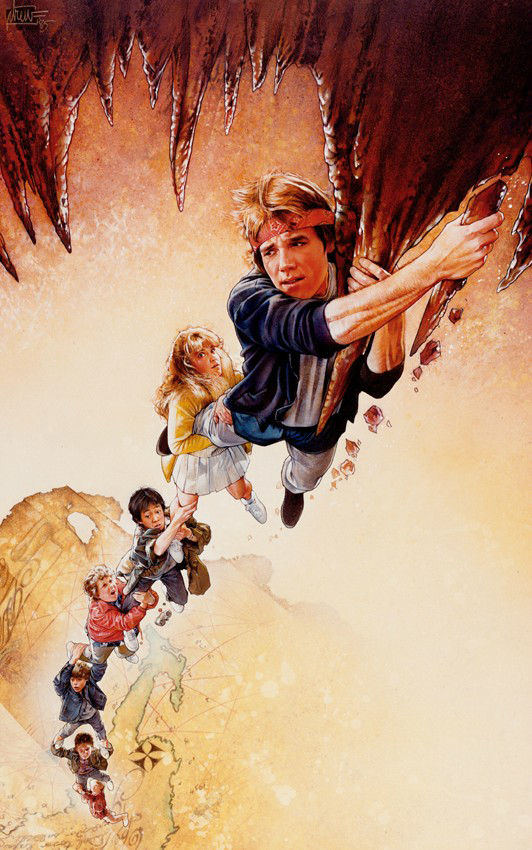
Drew: The Man Behind the Poster is an in-depth look at Drew Struzan's career and life. His work is timeless, and has impacted more people than almost any other modern artist. So many people are familiar with his work, despite not knowing his name. Here's a few to get you started:


The documentary follows Drew's beginnings as a starving artist to his slow but sure crawl to being one of the most beloved artists in the world. I can't recommend this film enough.

What really makes it work is Drew's willingness to be interviewed. I was afraid that this film would turn into a simple montage of people saying, "Oh, man, I love that poster!" Thankfully, that stuff takes a far backseat to Drew himself talking about his life, experiences, and lessons learned.

Yes, there are interviews from famous actors and others in the film industry, but they're people that genuinely care about Drew and his paintings. They have a lot of insight and sincere love for Drew's work, and it really comes through. There's no needless filler.


Drew seems like a very private, truthful, and direct kind of guy. He's very trusting (to a fault), and just loves his work. It doesn't matter what subject he's painting, or if he's being paid. He'd do it regardless. His passion for the art is inspiring. Hell, after watching, I wanted to go learn how to paint.

His wife Dylan also provides a lot of insight on their lives and struggles to be in a non-threatening situation life-wise. They're both so candid about everything, it's almost impossible to stop watching. Drew discusses a lot of the stories behind the posters, and the ins and outs of his career.

It's also great to see this in HD, because they show a lot of spectacular close-ups of Drew's work. It's something that can't be replicated through a computer monitor. It really shows the intricate details, color, and textures of the work, and makes the paintings just spring to life.


The last parts of the documentary talk about how most movie posters were shifted from actual artists to computer enthusiasts who could whip something up in Photoshop over a weekend. It's really disheartening to hear not only Drew, but other brilliant movie poster artists tell how they've been cast aside, merely to cut costs.
And it's true. Movie posters, which are normally one of the first things you see (and are supposed to get you to want to see the movie), look so boring and flavorless. Everything looks like everything else. It's just another thing that's fallen to the Hollywood crap of "if you do something once, do it a billion times. Even though it never worked in the first place, keep on doing it, because doing something new requires effort. Don't give people any other option, so they'll be forced into accepting it."

Drew is also shown going to Comic-Con in San Diego in 2010, and the overwhelming response he received (including an Inkpot Award). He is truly speechless, astounded that people came from so far "just to see little old me."


The fact that Drew is still alive also makes the documentary work very well. Too often a project is started after a notable figure has died, because it took their death to get people interested. The creators can't ask questions, because obviously they'd get no answer. Everything has to be constructed from archival material, which is too bad, because these people sat for years unaware that myriads of people still adore their work.

Bottom line? Watch it. Watch it now. It's streaming on Netflix and Amazon. Or you could just go buy it. You won't be disappointed, and to really see how much Drew accomplished over the years is incredible.

The credits make such an impact too. In order to show the posters Drew painted over the years, the filmmakers have to show copyright info and such. The absolutely gargantuan list of work, listed one after another, is mind-boggling. I was completely blown away.

If you decide not to watch the documentary, your loss. But you at least owe it to yourself to check out his website. All the movie stuff is under the Illustrated Works. The art for art's sake is under Studio Works. He also has not one, but two books available. Both are filled with artwork and insights. Truly a master of the art.

Man! If only I had $200,000!

January 11, 2014

Konga - 1961


Do not be fooled by that awesome poster.

Konga is a 1961 science fiction film starring Michael Gough. It could have been a classic sci-fi flick, except the last fifteen minutes ruin the entire movie. And the special effects are nauseating. But I'll get to that later.

The film opens with a burning plane going down somewhere and exploding. Cut to a radio reporter informing the public that a plane containing Dr. Charles Decker, famous botanist, has crashed into the jungle depths. Cut to a newspaper article of Dr. Decker returning to civilization one year later. A nice start without any superfluous filler.

With visual aids in case you weren't paying attention.

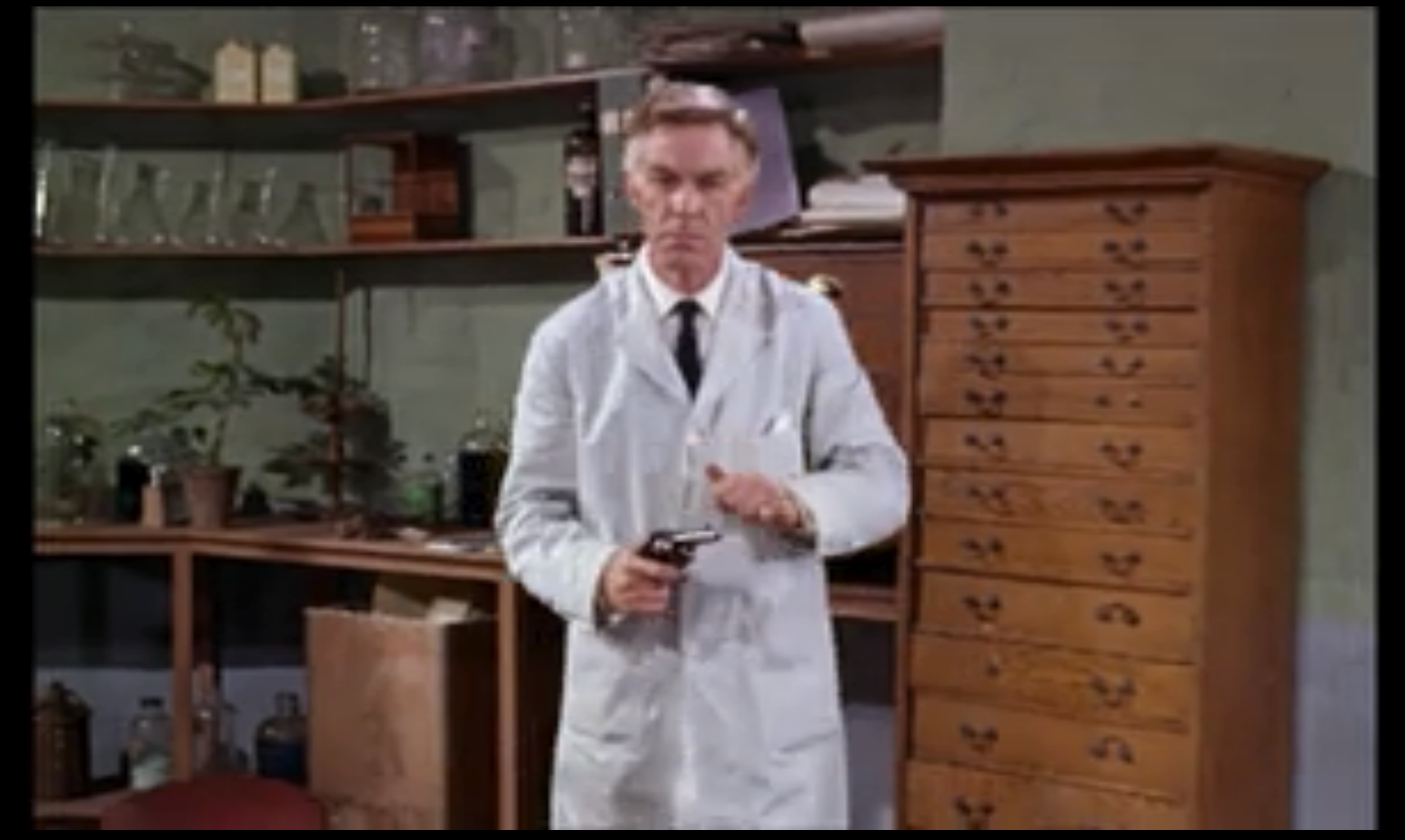
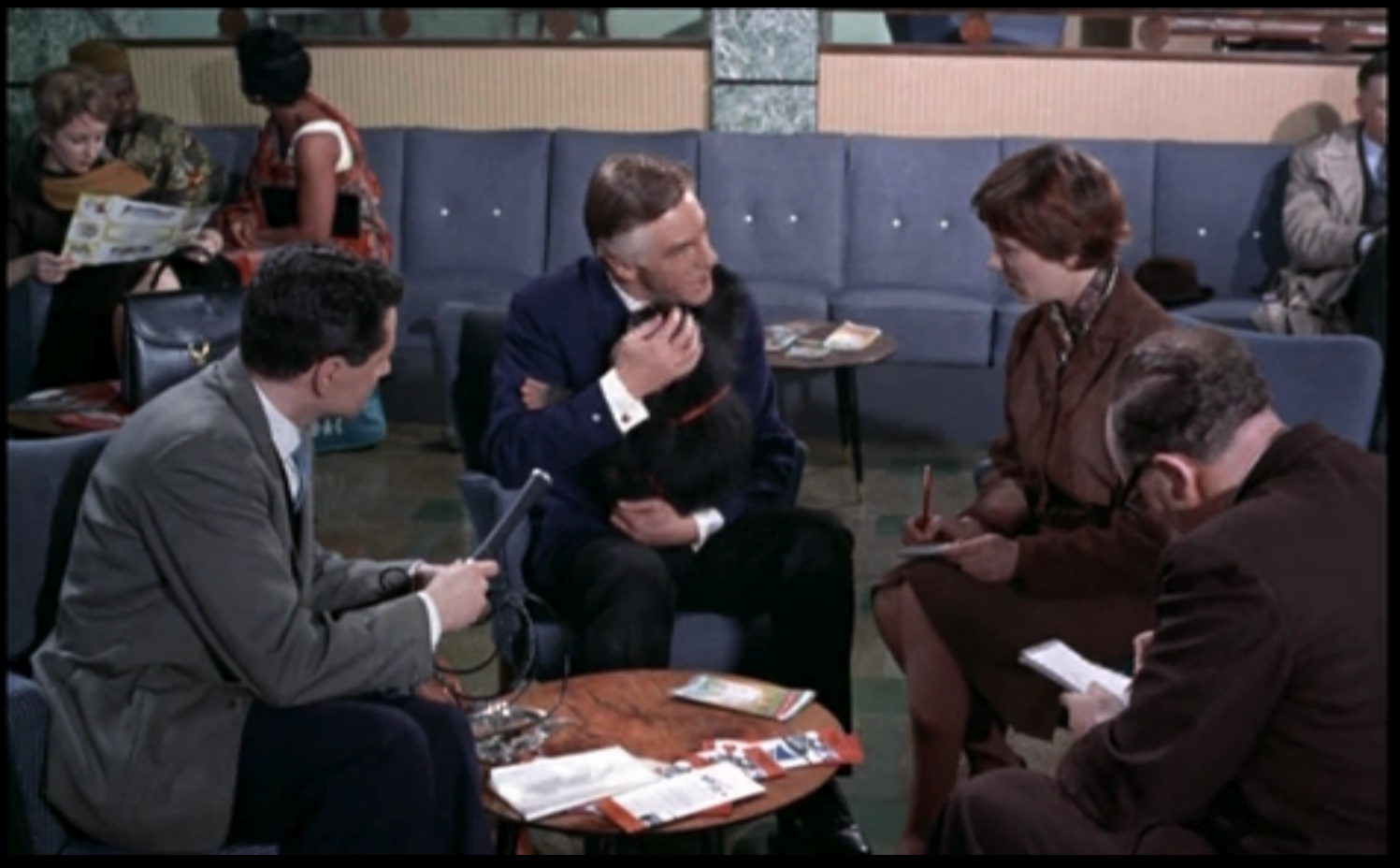
Dr. Decker is being interviewed by a newspaper about his whereabouts over the past year. He informs them that he was rescued by a local tribe and lived with them until eventually finding his way back. He carries a chimpanzee with him (christened "Konga"), and states that he has found a revolutionary link between plant and animal life.


When he returns home, his housekeeper/assistant/secretary Margaret (played by the excellent Margo Johns) states that she kept all his affairs in order, despite his possible death. She does question, however, his immediate need to return to work and strange demands, and also reveals she felt somewhat neglected that he didn't inquire about how she was doing after so long.


Dr. Decker goes into the greenhouse and starts tearing out the existing floral arrangements (much to Margaret's vexation) in order to make room for plants that he brought back with him. He also instructs her to turn the temperature up to 90° to mimic the tropical climate.


In the laboratory, Dr. Decker is explaining the botany of the jungle and how he discovered plants and seeds with fascinating properties. While talking, the house cat slinks in and starts licking up a puddle of spilt solution on the floor. Decker responds logically.


When Margaret protests, he shouts that they don't need a cat the size of a leopard running through the streets. This is foreshadowing to what Decker's work will produce.

Later, in the greenhouse, we see some of Decker's "plants" that he brought back with him. It is here that we start to see a long line of absolutely egregious special effects. It's an insult to even call them special effects. Hell, I wouldn't even call them regular effects. "Accidents" would be a more fitting word.

It's even better than it looks because those "tongues" kind of move around.

Decker then injects Konga with his serum, which incredibly makes Konga immediately grow in size. Decker is thrilled with the results, and Margaret incredulous.


The next day, Dr. Decker lectures his class on where he has been and what he has seen. After class, he meets with and stands uncomfortably close to Sandra, one of his students. Sandra is a generic hot blonde (and "actress" in the loosest sense of the word).

"Acting...is...easy!"

Decker is obviously creeping on her. He notes that she is different from the other students, that there's a sense of "maturity" about her. She is oblivious, and loves working with him because he's so intelligent. Even some of the dialogue is unintentionally disturbing:
"I can't get over how you've grown!"
"Well, you were gone a year."
"That's true. And I of all people should understand growth."
I understand why Decker said that, but in this context...um, okay.

Later, Decker meets with the dean of the college. The dean is upset about the interview and wild claims Decker made earlier. Decker assures the dean that he won't embarrass the school, but the dean is unconvinced. Decker insists that he knows the truth, and that no one will get in his way. The dean explodes, shouting that as long as he's dean, Decker will do as he says. Cue foreshadowing brass music.


Decker is back at his lab, and gives Konga another serum injection. Konga then grows into the absolute dumbest and fake looking ape I have ever seen in any movie ever.


Yes. This. Holy crap.

Here's a close-up for you:

What.

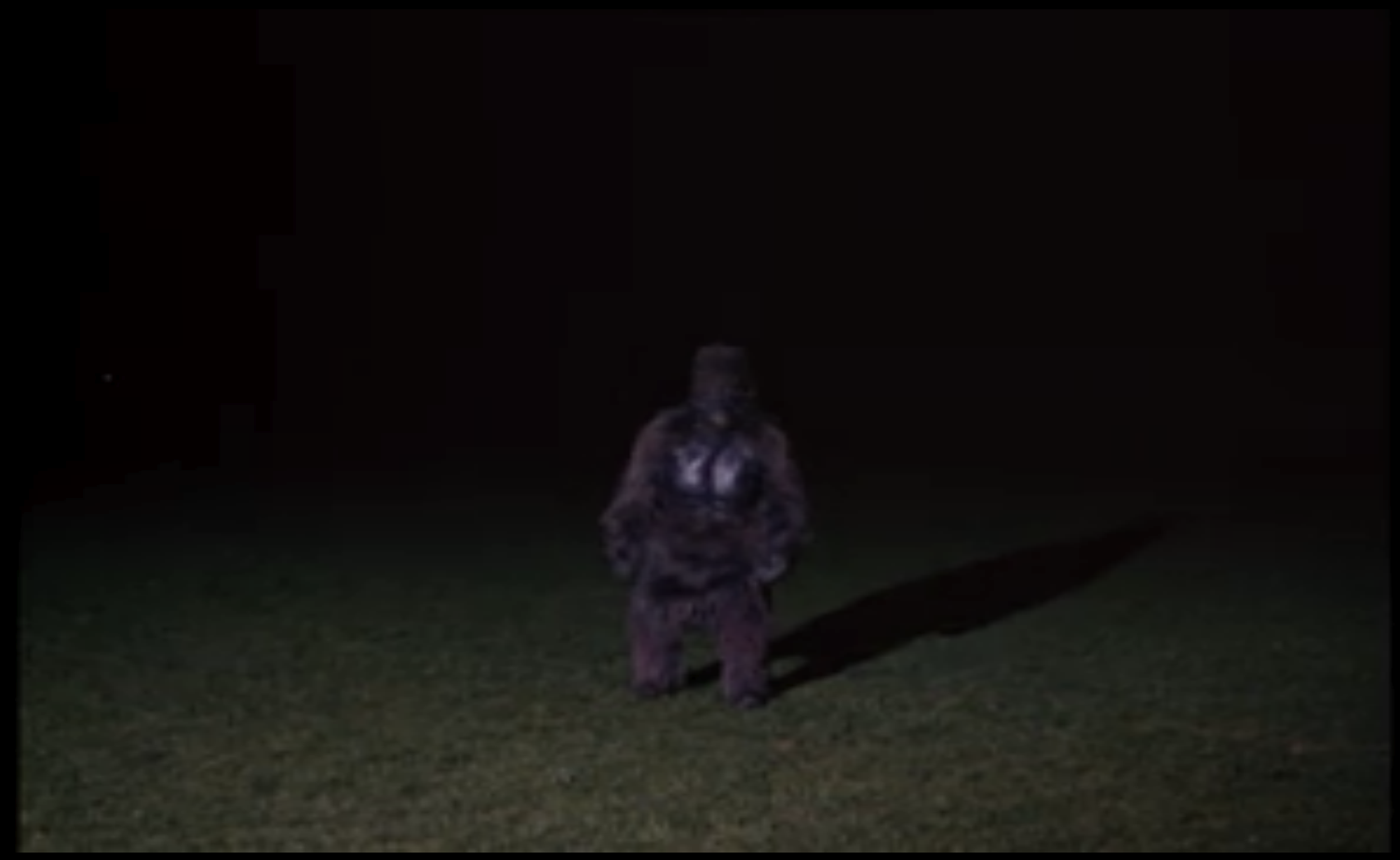
I should point out that Decker's serum also has the fantastic ability to somehow turn a chimpanzee into a gorilla. Decker takes a small light and sort of hypnotizes Konga into obeying his commands. Meanwhile, the dean is working late. Eschewing any form of subtlety, Konga plants himself directly outside the dean's window before smashing through it and snapping the dean's neck.


The police are baffled, but state they did find some black hairs on the dean's neck. It's only a matter of time before they piece the puzzle together. Back at the lab, Margaret confronts Decker about the dean's death, at which Decker doesn't seem to care. He states that human life is inconsequential to the outcomes of his experiments, and asks what Margaret wants in order for her to keep quiet.

She concedes that she's tired of being just his assistant, and wants to get married. Yeah, good idea Margaret. Plant yourself closer to the psychotic scientist with a murderous gorilla. Decker agrees, but says it'll have to wait until the end of the school term so they have time for a honeymoon. The entire scene is ruined by the fact that all the "plants" are still in the background (and they're moving slightly since they're "alive"), completely distracting the viewer.


The police are interviewing all staff at the college, including Decker. He feigns concern over the dean's death and puts the police at ease, even managing to calmly light a cigarette while being interviewed.

Slick.

Decker later has a party, where a bunch of fellow scientists attend, including a Professor Tagore. The professor is researching a similar subject to Decker, which unnerves the doctor. Decker suggests they work together, stating science must come before the individual. Tagore politely turns him down, pronouncing that he has made more advances than Decker could imagine, and feels positive that he will soon have success.
"I am certain that I shall be the first to proclaim a new method of mutation, which will accelerate growth in such a manner, that must revolutionize the world."
"And I am certain that my bipedal gorilla will snap your neck."

He's practically digging his own grave. He does agree, though, to have a consulting meeting with Decker later that night. Cue foreshadowing brass music.

At the meeting in Tagore's lab, Decker becomes confrontational. He even threatens Tagore, claiming, "I have earned the glory that will be mine." He then dramatically declares:

"Professor Tagore...YOU ARE TOO LATE!"

This is actually my favorite scene in the movie.

How he let Decker in but failed to notice the bipedal gorilla, we'll never know. After strangling Tagore, Konga starts trashing the lab. Decker states that the night's work is done, grabs Tagore's notes, and they both leave.

I will remind you again that this is what Konga looks like.

The next day, Decker takes his class for a field trip out to a park area to collect ferns and other plants. Since they don't all have transportation, they load into the back of Decker's large truck (oddly, no one complains that there are gorilla feces everywhere). Sandra, however, is asked to ride up front with Decker. Bob, who is crushing on Sandra, shows suspicion at Decker always making excuses to spend time with Sandra.

Bob's the guy in the blue sweater who isn't three times Sandra's age.

In the truck, Decker starts making his move on Sandra, saying he doesn't always think of her as just a student. That the real reason he's excited for this field trip is to get to spend time with her. Naturally, she is as dumb as a brick wall and does not realize what is going on.

After the group heads out to find plants, Bob confronts Sandra about how Decker is being creepy as hell. Sandra dismisses him, saying that Dr. Decker said this field trip is part of the classwork (despite him directly telling her literally minutes before that it's an excuse to get to spend more time with her). Sandra eventually allows Bob a date that night, and instructs him to pick her up at 8:00. Unbeknownst to both of them, someone is eavesdropping on their conversation. Cue foreshadowing brass music.


It starts to rain heavily, so all the kids run to the nearby ranger's hut. Since it's the late 1950's, a boy pulls a radio out of his jacket and they throw an impromptu dance party.

It's weird.

Decker and Sandra burst in from the rain, and Decker instructs the kids to run down to the truck so they can head back. Bob hangs back, and confronts Decker about Sandra. It escalates quickly.

Oh.

Bob seems to realize what he's doing and lets Decker go. Decker advises that they both just forget about it. Bob agrees, and they go their separate ways. Everybody in this film is incredibly proper, even after a fight like this. Decker's response to being almost murdered by a student five seconds ago:
"I didn't realize you felt so strongly about Sandra. No matter what your feelings are, you should try to control your temper."
What class.

Later on, Bob is preparing for his date with Sandra. He goes outside to start up his scooter. But darn it all! It's just not starting up! The bushes behind Bob are rustling, almost as if someone or something is there...

I will remind you again that this is what Konga looks like.

Bob is dead, and Konga runs away before anyone sees him. I will point out that whenever something in the movie looks bad, it's almost like the crew goes out of their way to accentuate how bad it looks. They throw in these shots that draw your undivided attention to the crap. They want to make sure you really see the crap. An example is Konga running away from Bob's body:


You really have to see it in motion to fully appreciate it. Konga is running on some grass with literally nothing else around him or in the background. And that shot goes on for a long time. He even makes time to stop smack dead center of the frame and directly face the camera before starting to move again. It's unbearably painful.

The police are still baffled by the mystery, though they know the deaths are connected. Margaret is becoming more and more stressed out by Konga/Decker murdering people for seemingly no reason (she doesn't know about Sandra). Then we get another example of the film's extreme proper atmosphere:


"What are you having with your poached egg? Murder!?
"Margaret, if there's one thing I can't abide, it's hysterics. Especially in the morning."

I could not stop laughing at those two lines. Margaret manages to convince Decker that he can't keep the police off his tail forever. Decker concludes that he must destroy Konga. He still has the formula, records, and notes. His plan is to leave for Africa, build a lab there, and continue the experiments. He also plans to deflect suspicion on the recent murders by attending Bob's funeral, and inviting Sandra to dinner in order to console her.

Naturally, Margaret is suspicious at dinner, especially since Decker keeps ignoring her and fawning over Sandra. He leads Sandra to the greenhouse and leaves Margaret to clean up after dinner. In the greenhouse, he shows off all his plants to Sandra, then asks her to be his new assistant...and more. Margaret is listening from the shadows, devastated that Decker would casually discard her.

And yes, these "plants" are still here.

Decker goes in to suck face, which Sandra declines. Margaret, still concealed, is overwhelmed.


STOP: AT THIS POINT, THE MOVIE FALLS APART. UP UNTIL NOW IT WAS TOLERABLE, EVEN ENJOYABLE (SAVE FOR THE "SPECIAL EFFECTS"). I CAN'T UNDERSTAND WHY ANYONE WOULD TAKE WHAT HAS HAPPENED SO FAR AND VIOLATE IT FOR THE FINAL FIFTEEN MINUTES. YOU HAVE BEEN WARNED.


Margaret runs to the lab and pulls out the small light used to hypnotize Konga. She orders him to listen to only her.

I will remind you that this is what Konga looks like.

Upstairs, Decker is still insisting that "no" doesn't mean "no."

And having a hell of a time doing it.

Margaret gets a bunch of the serum and injects Konga again. She states "it will be easier for you to obey me," which makes a ton of sense, right? She tells him that he has his orders, and to obey them. Yet, it never shows her giving Konga any orders whatsoever, and she doesn't do it during the shots of Decker and Sandra. Again, the movie is already falling apart. Better not to ask questions.

Konga gets the goofiest look on his face ever, and begins to grow.

I challenge you not to laugh.

From this point on, Konga's size changes and reverts dramatically, often between consecutive shots. The last fifteen minutes of this film is some of the worst editing I've ever seen in a movie. Anyway, Konga is for some reason wildly out of control and angry, despite not having a reason to be. He trashes the lab and reaches for Margaret. He grabs her, and the next shot is a real treat.


It's not even a doll that has the proportions or even remotely looks like a real person. It's just a freaking doll. Holy crap. The close-up shots of him holding her are just as bad.


Then he throws her to the ground, even though they had a wonderful relationship the entire rest of the movie.

I'm sorry, but so much of the last fifteen minutes has to be seen to be believed.

Konga then continues to grow and smashes his way through the ceiling, followed by the roof of the house in a very explosive fashion. He then stumbles his way to the greenhouse, where Dr. Rape is still at it.

I will remind you that this is what Konga looks like.

Then we see some obvious King Kong reference shots, where Konga is peering through the windows at the people inside. He then smashes through the roof, startling both Sandra and Decker. I guess they couldn't hear Konga literally destroying the house less than fifty feet away. Sandra blunders too close to one of the "plants" that resembles a Venus flytrap, and her arm is caught. Konga then King Kong reaches into the building and grabs Decker.

"And the academy award for best special effects goes to..."

Meanwhile, the fire department is racing to the house because of the lab fire. They are shocked when they see Konga, who decides not to bother them and walks the other way towards downtown. The people notice him (kind of apathetically) and start to run. This is the start of the whole "Konga walks through the town" scene. It's made up of a bunch of recycled footage of Konga's face, Decker's face close-up, people running indifferently, and random shots of buildings with Konga superimposed near them. It goes on for way too long. Almost a full five minutes. And since it looks beyond terrible, it's incredibly boring. They also recycle the same three "Konga!" yells of Decker over and over again.


Eventually the police get called, and start mobilizing troops in the area. This leads to more recycled shots of people in uniform running alongside the civilian running shots. At one point, Konga stops moving, which isn't really momentous, because he's been constantly starting/stopping for the past five minutes. But since the plot needs to move forward, this time it's significant. The people also all stop running and note that Konga has stopped. As opposed to, you know, still running away from the giant gorilla even though it stopped. For some reason, they also do the superimpose thing for regular people and backgrounds. But only sometimes. I don't know.


Also, for some reason, the crazy mob managed to be a crazy mob while staying on the sidewalk. Just because you're running in a riotous mob, that doesn't give you the right to break the traffic laws. Remember that.

"We're not just a mob, we're a British mob."

It also gives all the police and military cars room to squeal into the scene. We then sit and wait for a full three minutes of the military men setting up cannons, guns, jeeps, you name it. All the while cutting to shots of Konga's face, with his eyes rolling back and forth. I guess he doesn't feel like reacting to anything at all. My absolute favorite shot of this part is when three guys are setting up some sort of artillery gun, and a fourth guy instructs them which way to point it. Like they don't know that it should be pointing towards the colossal fucking ape.

"That's the thing we're aiming for, men."
"Ooooohhhhhh."

It's funny too, because all the people on the set are sort of nonchalant about the whole thing. They'll shuffle into position, not really seeming to care. It's great. So then, finally, all 900 people that have had an hour to position themselves start to fire on Konga. But from Konga's shots, it appears that maybe two or three guns are shooting at him. Oh, and none of the bullets ever hit him, they just shoot off into the distance.

Here's what's apparently shooting at Konga.

But this is what's below.

And these.

And this.

And these.

And this.

Oh, and this thing too.

Ow, you guys.

After too many shots of gunfire and close-ups of Konga's face, he decides to chuck Decker to the ground. He literally and figuratively throws away the most engaging part of this movie, discarding it for no reason whatsoever.

Pictured here in this extremely expensive shot.

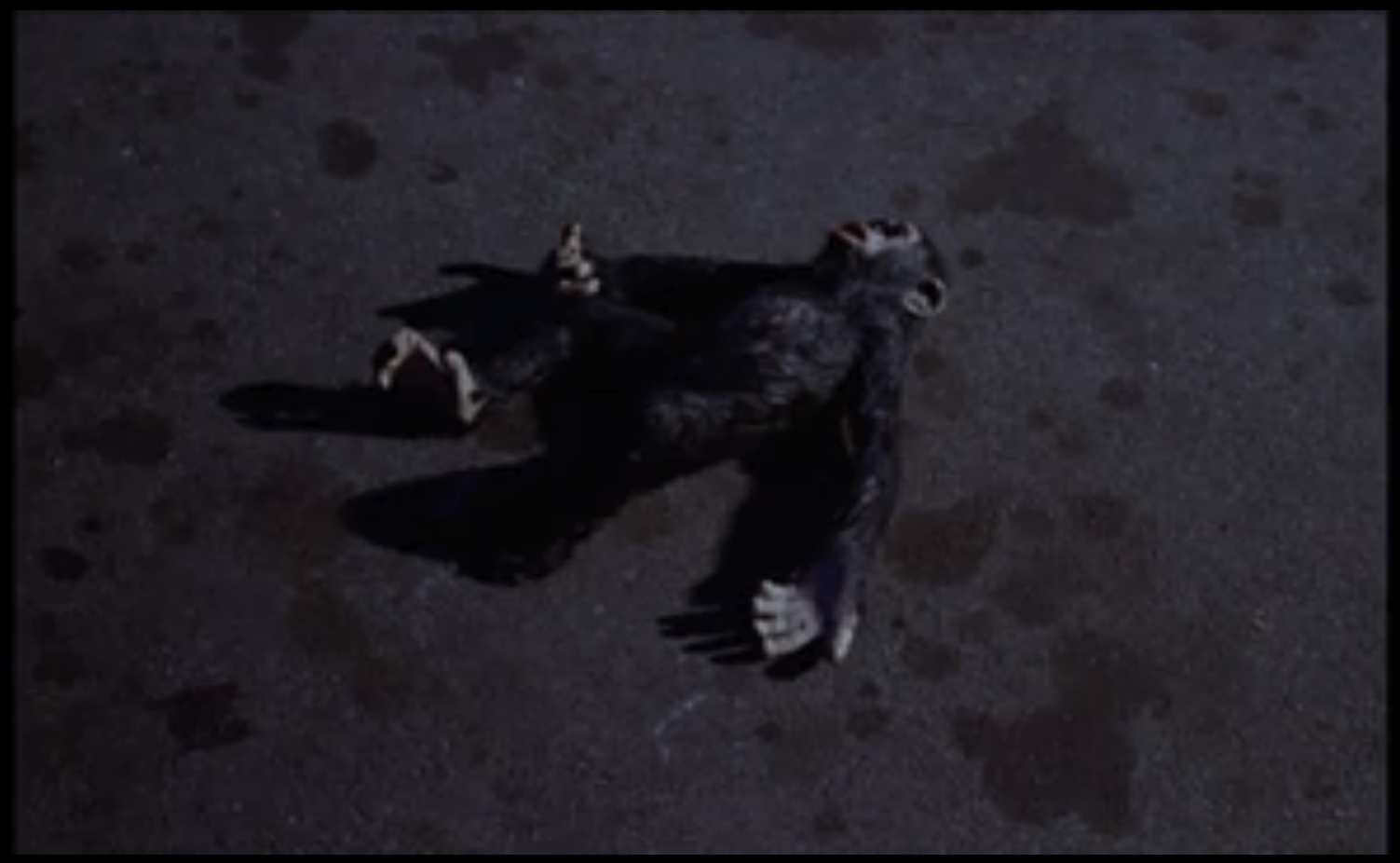
Finally, Konga falls, and inexplicably shrinks down to his original chimpanzee-size form upon death. Well, almost original form I should say.

Sigh.

The people gather round to look at the two bodies. There is absolutely no dialogue, despite shots of the important police officers from before and higher-up military people. Come to think of it, there's no real dialogue past when Margaret hypnotizes Konga in the lab. But who would think that the final fifteen minutes of a film without talking of any kind would be a bad idea? Then the camera slowly tilts up to the clock shown before (which is now dramatically chiming), and...


That's it. That's the whole damn thing. What?

Like I said, the last fifteen minutes discard everything that came before, and doesn't even seem to give two shits about it. The complete lack of dialogue is a strong supporting point, as well as the senseless killing of the two actual good parts of this film. There is also noticeably no music during almost all of this part, again leading to the conclusion that someone haphazardly ordered it thrown in last minute.

Also, almost nothing is wrapped up or made clear. Many questions are never answered:

  1. What happened to Sandra in the greenhouse?
  2. Did the police ever connect the murders with Konga and Decker?
  3. Would they even be able to, since Konga is now 200 feet tall?
  4. What will happen to Decker's research? Because the fire clearly did not burn down all of the lab.
  5. Why did Margaret feel the need to inject Konga with more serum, when it's clear he's more than capable of murder without being detected?
  6. Why did they use a toy monkey for Konga's death? The actual chimpanzee from earlier in the movie did an awesome stunt where it actually carried and delivered a tea tray down the stairs. Could they not also train it to lie down and not move?
  7. Why do all the people in the crowd in London sound like they're from America, with no trace of a British accent?
  8. Why didn't Konga obey either Margaret or Decker? Did his size somehow impede his obedience, but only this time?
  9. How did Decker's serum turn a chimpanzee into a gorilla?
  10. Why (and how) did the gorilla only walk on two legs the entire movie?

I feel that someone higher up in production wanted a King Kong-esque movie, and didn't pay attention to what was happening until the finished script was handed in. Clearly the way the film progresses does not lead itself to a giant ape attacking a metropolitan area. But that person said, "Screw that! Scrap this last part! Just make him really big and have him start killing! Then have lots of guns take him down! Yeah! It'll be awesome! That's what the people want to see! Make the poster reflect that too!" They even try to hook the viewer with the King Kong connection in the freaking poster!

Pictured: What doesn't happen in the movie.

Obviously it makes no sense, and ruins the whole thing. And as stated before, killing off Margaret and Decker without a second thought is both literal and figurative. It's almost like anything that would have resembled or reminded the audience of an actual plot had to be thrown out, so no one would realize how dumb it was.

It didn't work.

It doesn't help that the editing is the worst thing ever, and pacing is completely nonexistent. The supposed "climax" of the film is the most bland, repetitive part of the whole film. And there isn't even any kind of resolution. I like to think that everybody quit once the higher-ups starting making ridiculous demands, and figured they could do it better themselves.

Apparently, there was some pride inside the studio about how expensive and lengthy the last fifteen minutes took. Really? I have a better idea. Don't make the last fifteen minutes as planned, and use all that money to get some actual good special effects. Here's a better (and far cheaper/more logical) ending:
After being spurned by Sandra, Dr. Decker tosses her into one of his carnivorous plants, stating she's seen too much, and if she won't work with him, he has no choice. He then follows Margaret into the house. Margaret is destroying the lab, including all the notes and records in a fit of hysteria. She screams at Decker, asking how he could do such a thing to her, after all she's done for him? Decker lies to her, saying she's the only one for him, and doesn't she still want to marry? But Margaret isn't having any of it, and starts searching for the gun shown earlier when Decker killed the cat. Decker then quickly commands Konga to attack. Konga rips the bars off of his cage and moves imposingly towards Margaret. She tries to reason with Konga, reminding him of all the good times they've had together and their friendship. Konga is immune to her cries of reasoning and strangles her. He then turns to Decker for further orders. Decker had the gun all along, and abruptly shoots Konga twice in the chest. Konga falls, his eyes never leaving Decker. Decker, visibly unmoved by the recent events, gathers the important notes and a case filled with vials of the serum. He then tosses a chemical from a beaker onto the fire Margaret started, igniting a violent and rapidly spreading blaze. He walks to the door, takes one last look at the soon-to-be completely destroyed lab, and leaves. Fade to black. Fade in to a few days later. Decker is walking onto a small, private plane from the runway. He is still characteristically calm. He finds his seat, opens the paper, and the passing stewardess asks if he needs anything. He politely requests something to eat, and gives her a private but leering glance as she's moving away. He turns back to his paper, the headline reading: LONDON MURDERS STILL A MYSTERY. The plane takes off as Decker smiles and shuts his eyes for a quick nap. He awakens to the sound of the pilot over the PA system announcing that they'll be arriving in Uganda (part of East Africa) in approximately twenty minutes. Decker places his hand on his briefcase, looks out the window, and smiles, his eyes twinkling. Fade to black and THE END (there, see? I put "THE END" words there, so it must be the end).
Believe it or not, there are actually a few good things in this movie. Michael Gough and Margo Johns are fantastic. In the scenes where it's just them talking (without any "plants" around), you can almost imagine you're watching a good movie. I have to hand it to them. They do such a great job, even though they had to know what a piece of crap this movie was. They gave it their all, in spite of Konga or Sandra standing next to them much of the time. I cannot give them enough praise.

Thank you.

And thank you.

The score is also incredibly good. Gerard Schurmann nails it. It is a score I would listen to as a standalone item any day. The instrumentation/orchestration, as well as the intensity to match the scene, is spot on. It kept me engaged during all the crap scenes (save, of course, the last part). Both Gough and Schurmann worked on Horrors of the Black Museum, and I do plan on checking it out solely because of them.

The writing (up until the end) was actually pretty damn good. The special effects almost ruined it, but Gough and Johns saved it. Seriously, they should get some kind of award, and I'm kind of sad Johns isn't in more things. If this movie were a book (I mean an original book, not a novelization of the movie), I would read it, because it doesn't cost extra to describe exotic plants on paper. Charlton Comics also published a comic book based on Konga from 1960 to 1965, notable because Steve Ditko worked on it before moving to Marvel.

It's been reprinted by IDW if you want to check it out.

It's hard to say whether or not one should watch this movie. If you want to see how one can act splendidly in the pallid face of mediocrity, then yes. If you've never seen Michael Gough in anything other than a Batman movie, then maybe. Otherwise, you can skip it.

I will remind you again that this is what Konga looks like.