Showing posts with label Zelda. Show all posts

December 20, 2015

Legends of Localization - Book 1: The Legend of Zelda (Part 2)

Check out Part 1 if you missed it.

After the First Quest, the Second Quest is explored. There are a bunch of differences between the gameplay, so naturally there are a bunch of text differences as well.


Items are looked at next. A basic list of Japanese and English names for items are placed side-by-side for comparison. A few are looked at more in-depth. Rupee vs. Rupy, Wooden Sword vs. Sword, Recorder vs. Flute, and Book of Magic vs. Bible for example.


Next are enemies. These include Wizrobes, Like Likes, Zoras, Darknuts, and Manhandla. The origins and surprises of some of these enemies was very interesting. Mato has definitely done his homework.


The second large chapter of the book discusses the manual. Obviously, the FDS and NES are totally different formats, so there's a lot of expected differences there. This includes loading times and saving your game. Outside of that, though, the text is mostly the same. Promo art is also the same, although screenshots of gameplay are different.


The manual and the game localization were most likely handled by an entirely different team, which is why there's so many discrepancies between the two. Since there was only so much space on a game cart/disk, a lot of extra information was included in the manual. This was one of my favorite parts of this book. It's also not hard to see why there are so many inconsistencies throughout, as "translating games without playing them first is very common...most translators get a few spreadsheets with text to translate and that's it."


The penultimate chapter looks at items outside of the game for reference. This includes promotional material (often provided by companies outside of Nintendo), prototype versions, board games, Game & Watch, guide books, magazines, and TV commercials among other things. Very cool stuff.


The final section is a little bit of personal thoughts from Mato about the whole thing. It's not very long, and is a nice final touch for the book. There are also a number of places shown to explore more game history, as well as additional Zelda lore.

It's really nice that Mato touches on games that had an influence on Zelda or vice versa, and includes screenshots and examples to illustrate the point. It's also great that he digs into the "why" of things, instead of just stating "they translated it this way, the end." He really wants to reader to understand why certain changes were made, because there's usually a good reason.


And again, Fangamer outdoes itself with the quality of this tome. Hardcover with gold foil imprinting, and cool obi strip. The book clocks in at just over 200 pages.

Conclusion:

This books works extremely well for two reasons.

  • Mato is very knowledgeable about Japanese translation and localization.
  • He knows the game itself inside and out. He could probably write a book just on the gameplay/secrets/etc. and not touch localization at all.

It makes the whole thing a very engaging and insightful read. It's not too dry, but it's also not too loose. It's a really good balance. He has a good voice, and speaks succinctly while at the same time being very informative . I can't recommend this book enough. Pick it up!

Legends of Localization - Book 1: The Legend of Zelda (Part 1)


Secret power is said to be in the localization.

Clyde Mandelin's site Legends of Localization is a gold mine for anyone interested in the Japanese side of video games released worldwide. He is living the dream that I'm sure many people have: being able to translate video games, manga, and anime professionally. His site has been up for years, but it's only recently that's he published a book in collaboration with the wonderful people at Fangamer. I'll only be talking about the book in this post, but I highly encourage you to check out Mandelin's site for a huge amount of content.

Mato (as he will be referred to from now on) starts off by telling the reader the book isn't going to be a boring text book, but rather "...a good mix of serious research, critical analysis, and a casual, laid-back attitude." Thankfully, he delivers. There have been more than a few books about video games that rely way too much on personal nostalgia and biographical info of the author, which really take all interest away from the subject at hand (I'm looking in your direction, Boss Fight Books). Mato keeps the biography stuff short and sweet. It's right in the Introduction and only runs for a few pages. Fine with me. The only other spot for personal tidbits is tiny little captions here and there. I can't praise him enough for keeping his personal life out of the writing. It's The Legend of Zelda, not The Legend of Mato, so thank you for keeping it that way.


The first section is focused on audio. The differences between the FDS and NES hardware is briefly explained, and is followed by several examples of where the music is different. To make things easier, Mato provides a QR code (or you could just go to his site and listen) for the actual audio comparisons. Next, some sound effect changes are explored. These include Sword Shooting, picking up rupees/hearts/items, doors opening, enemies dying, and the like. Some of the changes are not that big, while other sounds could not be more different. It's pretty interesting. There are also waveform comparisons in the book, which I suppose is the next best thing to the actual audio. The NES seems to make way more use of the DPCM channel in an attempt to compensate for the lack of channels the FDS supports.


Next up is graphics. Obviously the title screen is different, but there are some font changes as well within the game. This whole section is pretty short, and it covers tiny miscellaneous things like the Name Entry text, the Zora sprite, and a couple of other things. Honestly, this section could have fit neatly into the chapter titled "First Quest," especially since the title screen and text are covered in more detail anyway. It kind of stands weirdly on its own.


Gameplay is next. Mato discusses why English text is so prevalent in Japanese games, and why they choose to use certain English quirks a lot of the time. Most of this section focuses on differences you'll encounter before really even starting the game, as well as how hardware difference affect the game itself (à la Pols Voices). Each subsequent port of the first Legend of Zelda is either based on the Disk version or the Cart version. And whichever the case, it carries over the same minor gameplay differences from the source material. There has never been a solid "definitive version," which I think is pretty neat.


Finally, we reach text. This is probably where most people think localization takes place first. Since Mato is a professional translator and has the résumé to back it up, he is a fully credible source to discuss this (not to mention write this book in the first place). Firstly, he talks about how Japanese people use different speech patterns and dialects based on gender, age, politeness, etc. and how it can get lost in the translation process. He then explores various instances where the translators did good jobs and bad jobs of conveying the original intended text and nuances. This is the longest section in the book, so there's too much to explain in this post. Countless instances of what was changed, the reason(s) why, and whether or not the localization succeeded. Players often think of the poorly translated lines first since they stand out so much. What are the actual original lines in Japanese? Do they make more sense in their native language? Surprisingly, sometimes the answer is still "no."


Continued in Part 2...

October 19, 2013

The Legend of Zelda: The Wind Waker HD


Blew me away...again.

Upon hearing Nintendo was giving a facelift to a previously released AAA title, I suppose the two main feelings I had were confusion and skepticism.

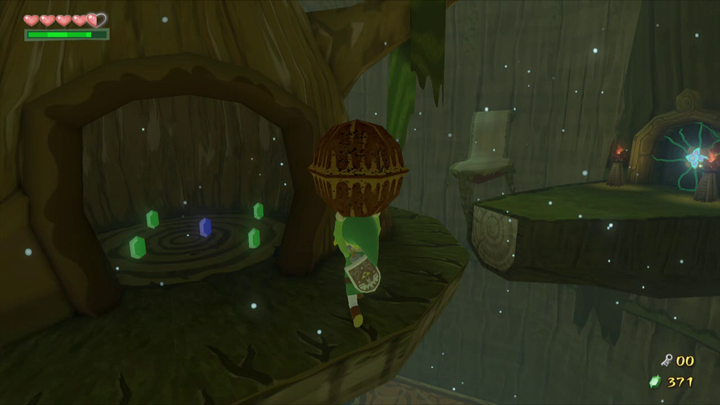
Pictured here.

Confusion because rehashing something from ten years ago in HD is not something the Big N does, no matter how good it originally was. To me, it's a money-grubbing tactic that companies use when they've got nothing else. They're all out of ideas and have to attempt to capitalize on what's worked in the past.

Skepticism because it's Nintendo. I mean, come on, really? I know the Zelda series is a big deal, but really? I didn't know if I fully believed it. But then they revealed it in a Nintendo Direct, so I had to accept it was true.

After playing through it, I have come to partially accept it, but still have some trepidation in giving it heaps of praise. Yes, it was good, but it was always good. If I only sing praises, does that mean I'm okay with them re-releasing other past titles with a new skin? My initial feelings of worry are still there, no matter how good the game turned out to be. Seeing as how it is Nintendo, I'm not too worried, especially with the current and future Wii U/3DS lineup. If they did it again, though, I'd start to get scared. I will accept them doing it as an (extremely effective) experiment, and leave it at that for now.

But on to the game itself. Damn, it was good. The tiny changes/improvements make all the difference in presenting a much smoother, flowing game experience. Doubtless you can find reviews of the game itself in over a decade of internet activity, so there's really not any point in me talking about the story, characters, and the like. Instead, I want to talk about some of the changes between the original GameCube release and the current Wii U one. This assumes you have played the original release sometime between 2002 and 2013.

Quick List of Changes

  • Items can now be equipped via the GamePad in real time. No more pausing to set items to buttons. Just drag and drop. If you're in a hectic spot, it is still possible to pause while setting items
  • Your Sail is not an item in the sub-screen. You just push "A" in your boat to pop it up. The same applies for the Cannon, Grappling Hook, and Wind Waker itself
  • The GamePad displays the dungeon maps (once you find them) and you can easily switch between floors and see treasures, bosses, etc. You also have a little Link head that displays both your current location and the direction you're facing, so you don't have to try and figure out where the heck in the room you are. If that's still not helpful enough, the map has a zoom function as well
  • After gaining information from a Fishman, you can access it right from your map, without having to call him over again
  • You have a cursor on the GamePad of where your boat is on the Great Sea, moving in real time
  • The GamePad's gyroscope can be used to aim the Bow, Boomerang, etc. I played this way until I got to a boss where it became too awkward to try and run/roll around while trying to aim/throw my Grappling Hook. Thankfully, there is an option to turn this feature off and play the old-fashioned, right-stick way
  • The HUD can be completely eliminated from the TV screen. It was cool to see it that way for a while, but it became tedious very quickly to have to look down at my lap every ten seconds to check things
  • In addition to the already-agreeable camera, you can now move around in first-person mode. You can also move while aiming with certain items (e.g. Boomerang, etc.) in this camera view
  • You can change direction while swinging on your Grappling Hook. You don't have to stop, rotate and start swinging again. It's very nice
  • Obviously, everything looks absolutely gorgeous in 1080p widescreen. The colors are vibrant, the visuals eye-catching, and the cartoon-esque style (originally controversial) really feels at home at this resolution. I think Wind Waker might be the most expressive Zelda game, partly due to things like Link's personality and facial expressions
  • You can obtain a Swift Sail, which lets you move across the sea much faster. For people that have played the original version, you will scream with glee. I vividly remember having to sail from one island to a distant other, and having time to leave the room, make a sandwich, eat half of it, then returning to find I had almost arrived at my destination. The Swift Sail also changes the wind to be at your back no matter which way you're turned
  • Getting hit while in your boat won't knock you out of your boat (unless it's a hard, hard hit)
  • Hero Mode (in which you take double damage and no recovery hearts can be found) is available right from the start
  • The Tingle Tuner, in which you needed a connected GBA to implement, has been replaced by the Tingle Bottle. You can use it to upload Pictographs to Miiverse for all to see and share. It's a nice feature
  • The Pictograph Box can now hold 12 Pictos as opposed to the original 3
  • You can download Pictographs via Miiverse. That means that if you're trying to complete the Nintendo Gallery and have passed a certain point where you can no longer get a character's photo, you can turn to Miiverse for help
  • The Deku Leaf has a cursor on the ground where you will land
  • The Cannon has a projection line as to where your bombs will go
  • Five Triforce charts have been replaced with the Triforce Shards themselves, meaning you don't have to spend a fortune in Rupees and time in getting them deciphered
There are more changes I missed, I'm sure. Attention to detail is really what sets Nintendo apart in this case. There have been other HD re-releases for games (e.g. Okami, Metal Gear series, Devil May Cry, etc.), but for most of them, the things that initially annoyed people are still there. An HD upscale is only that. Obvious flaws and irritations noticed the first time around aren't seen as worth changing. This is why I enjoyed Wind Waker HD so much more than those other re-releases. The gameplay itself has been fine-tuned to an insane degree. And the fact that Nintendo decided to pretty much do it themselves instead of letting an outside company really shows how much they care.


Is it worth $50? I say yes, especially to those that haven't had the joy of playing it before. It really stands out as one of the best games in the series, and with these new tweaks, the argument is even stronger. It's a major reason to pick up a Wii U if you've been on the fence so far.

Nintendo took their old technology and seamlessly integrated it into the new. Just talking about using the Wii U GamePad for a game released in 2003, and having it work better than the original controller speaks volumes. Having the two work together is what really made the difference. Instead of saying, "Oh, yeah, you can use the GamePad. The buttons are the same as the GameCube controller, so it's nothing new, just looks different," they instead choose to say, "Hey, we're going to actually use the functionality and features of this thing to really incorporate it as a huge part of the game." The number of changes really make the game feel like it could have been released today for the first time, and it would be just as successful. But the changes don't affect the main gameplay or story. It's still the same game at its core. Nintendo has managed to make a decade-old adventure feel new and fresh, even to those that have already experienced the journey countless times. I cannot applaud them enough for that. But I also shake my finger to warn them not to expect to be able to do it again any time soon.