January 26, 2014

Pluto, Volume 1


Pluto is a manga written and drawn by Naoki Urasawa from 2003 to 2009. It's based on one of Osamu Tezuka's original Astro Boy stories, The Greatest Robot on Earth.

Understandably, it was a long process to gain the ability and trust to use the Astro Boy (Mighty Atom in Japan) property. Tezuka and Astro are both cultural icons, and Tezuka's work holds a special place in the nation's heart. Macoto Tezuka (Osamu's son) supervised the creation of Pluto. In addition, Tezuka Productions also monitored and provided their official support.

Even though it's based on an Astro Boy story, Astro is not the main character. It instead follows Inspector Gesicht (a robot), as he attempts to solve a series of murders being committed across the globe.

Act 1: Mont Blanc

The first robot murder Gesicht checks out is Mont Blanc, a sightseeing guide and eco-conservationist in Switzerland. Mont Blanc was cherished by humans and robots alike across the globe, and his extremely violent death hits hard.


Gesicht's second investigation is of the murder of Bernard Lanke, a passionate activist. Lanke had supported (and been a key member of) several causes over the years. The only connection between his and Mont Blanc's death is the jamming of long objects in the sides of their heads, depicting horns.


Authorities are confused, because Mont Blanc was an extremely strong, able, and advanced robot. Only another robot could have torn him apart so easily. But Lanke was a human. According to the Robot Law (which all robots must instinctively follow), no robot may harm or kill a human. Only one case of a robot-killing human had ever been reported, nearly a decade before.

An urgent call suddenly comes in about a man who broke through one of the police checkpoints. Gesicht locates the suspect, who had injured the checkpoint human police officer and destroyed the robot one. He apprehends the killer, then visits the wife of the destroyed robot officer to tell her the news.

Act 2: Gesicht

Gesicht then gets a regular diagnostic by a Professor Hoffman, who informs him that nothing is out of the ordinary in Gesicht's system. Hoffman also expresses interest in learning more about the dreams Gesicht is having, stating he's always found it fascinating that a robot can have dreams as well as a subconscious. He tells Gesicht that's he should take a vacation since he's so stressed out about the case he's working on. He suggests Japan.

On the way out of the lab, Gesicht stops a waste collector who is scrapping the remains of the robot officer. He takes the memory chip to the wife he met earlier. She inserts her husband's memory chip, and puts the act of the murder on a monitor. Gesicht is shocked to see a figure in the distance on the footage. The figure is making a massive leap between buildings, but it isn't a robot.


Act 3: Brau 1589

Gesicht visits the facility that has been holding the murderous robot, Brau 1589, to try and determine how and why a robot could kill a human. Brau tells him that the humans inspected every single aspect of his A.I., but found no defects, so how he was able to kill a human is still a mystery eight years later.


Gesicht shows Brau photos from both murder sites. Brau discusses the historical use of horns and death in many cultures. They touch on the fact that the Roman god of death was named Pluto. Brau reveals that he and Gesicht both know that six more murders will take place. The cream of the crop, the most advanced robots ever created are all in danger, and Gesicht is one of them. These robots also share the distinction of being able to be turned into weapons of mass destruction.

Act 4: North No. 2 (Part 1)

The story shifts dramatically to events going on in another part of the world. A giant castle in Scotland is inhabited only by Paul Duncan, a blind musical genius. His new butler, North No. 2, arrives and informs Duncan he's up-to-date on everything the job entails. North wears a large cape to conceal all of his body save his head and arms. He stands around an impressive ten feet tall.

Duncan seems to be an angry man, prone to tantrums and physical violence. He expresses an immediate dislike to North, especially since North informs him he used to be a military robot. North asks Duncan why he composes only on an acoustic piano instead of the vast array of mechanical instruments available. Duncan responds that they're just a bunch of machines that only make fake music. They can't capture the real thing.


North continuously angers Duncan by attempting to play his piano. North says he just wants to learn to play, and he never wants to go back to fighting on the battlefield ever again.

Act 5: North No. 2 (Part 2)

North hears Duncan humming the melody he just can't seem to compose in his sleep. When he asks Duncan about it, Duncan tells him the story of why he's so angry. When he was a child, his mother abandoned him to go live with a rich landowner and sent him to a boarding school in England. He was a sickly boy, and was bullied to no end. At one point, he got so sick that all the doctors thought he would die. However, a black market doctor said he could cure him, but he would lose his sight. Duncan agreed. Later, he learned that his mother had died, and that the wealthy man had never even taken her as his wife, only a mistress. Duncan takes a cynical pride in knowing that he's unfathomably wealthy from his composing career.


Act 6: North No. 2 (Part 3)

Duncan tells North that he wants him out of the castle by the next day. North indeed is gone the next morning. Certain projects that Duncan had lined up are cancelled by the patrons, much to his dismay. He continues to be unable to compose the song he's been working on for such a long time. Right before taking an axe to his piano, North No. 2 suddenly appears and shouts at him to stop.

North tells him that he traveled to Bohemia to find out the truth about Duncan's mother. He reveals the only reason his mother went with the rich man was to pay for Duncan's experimental treatment. She loved him very much, and was right by his side, too ashamed to admit what she had done. North also tells Duncan that he's forgetting a very important memory. He and his mother used to hold hands, watching the sun set. She would always sing a certain melody. It turns out to be the melody Duncan can't figure out in his composition.

Duncan breaks down, finally truly realizing his mother's actions. His character changes considerably for the better. Time passes, and he and North play the piano together.


One day, though, North senses a weather disturbance in the distance. It is very similar to the one that preceded Mont Blanc's demise. He also senses something threatening heading their way. He tells Duncan not to worry, and that he'll be back shortly. He rips off his cape, revealing a massive bunch of weaponry, and flies into the sky. Duncan is unable to see what is happening, but he hears massive explosions. All of a sudden, his mother's melody echoes through the entire sky. It's followed by an explosion, then silence. Duncan asks North to hurry back, because it's time for their piano lesson...


Act 7: Brando

Jump back to Gesicht. He's watching an intense robot wrestling match, of which the wrestler Brando is victorious. He visits Brando after the match, who is revealed to be built like a human (much like Gesicht). He invites Gesicht back to his house for dinner.

Brando lives in a crummier part of town, but says he's got more important things to spend money on than a big mansion. At that point, his five children burst through the door. Gesicht joins Brando, his wife, and their kids for a human-style meal. It's pretty chaotic.


After dinner, all the kids go to sleep, and Brando and Gesicht talk about the recent murders. It's revealed that Brando and Mont Blanc fought together during the war. Gesicht tells Brando that they're both murder targets, and to contact him if he hears anything.

Gesicht then finally makes his way to Japan, where some kids accidentally kick a soccer ball into his path. He muses how children are great, then sees a young boy pick up a snail off of the ground and place it into a nearby garden. He inquires if the boy is named Atom, which the boy confirms...


Impressions

I thought it was great. I can completely see the Tezuka influence, especially in the North No. 2 arc. That sense of building emotion and tear-jerking endings permeates the writing. It just has a different atmosphere since it takes place in a more modern, "realistic" setting.

The art is very good. The locations have a lot of detail, and hit that "futuristic from a 1960's perspective" perfectly. The robot designs get this aspect too. It's such a cool fusion between Tezuka's original Astro Boy ideas Urasawa's re-imaginings. Every time I see a character I recognize I just smile, because their character type and personality is the same, but they're less cartoonish I guess. The emotion that Urasawa captures is very impressive.

The characters also seem very real and easy to connect with. Their personalities are well-defined and interesting, and it keeps the story fresh.

The sudden shift in location for the North arc wasn't unexpected. Lots of the Astro Boy stories suddenly take place in another location. And even though the North arc is present to solidify some major plot points, just as much effort is put into the storytelling. I thought as a standalone thing it was probably the strongest Act in this volume.

The mystery is definitely built up. I'm looking forward to the unearthing of the unanswered questions and all the connections between characters and histories. On to Volume 2!

January 24, 2014

Drew: The Man Behind the Poster


Brilliant.

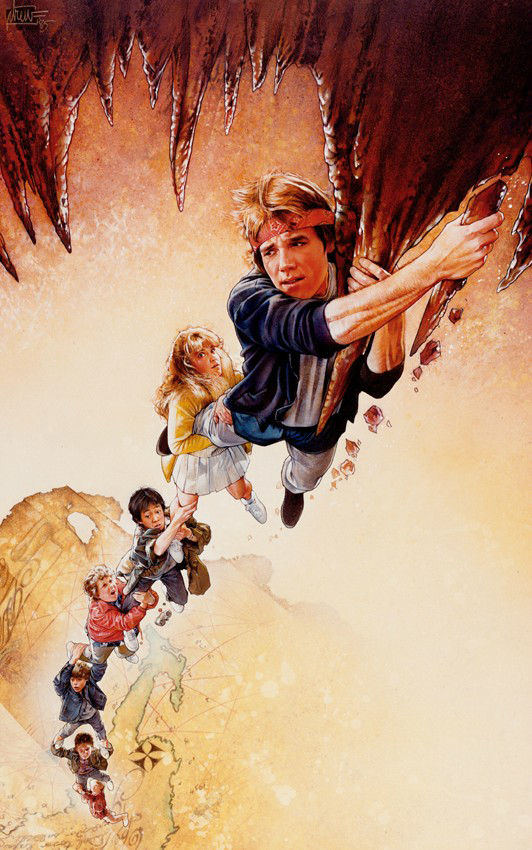
Drew: The Man Behind the Poster is an in-depth look at Drew Struzan's career and life. His work is timeless, and has impacted more people than almost any other modern artist. So many people are familiar with his work, despite not knowing his name. Here's a few to get you started:


The documentary follows Drew's beginnings as a starving artist to his slow but sure crawl to being one of the most beloved artists in the world. I can't recommend this film enough.

What really makes it work is Drew's willingness to be interviewed. I was afraid that this film would turn into a simple montage of people saying, "Oh, man, I love that poster!" Thankfully, that stuff takes a far backseat to Drew himself talking about his life, experiences, and lessons learned.

Yes, there are interviews from famous actors and others in the film industry, but they're people that genuinely care about Drew and his paintings. They have a lot of insight and sincere love for Drew's work, and it really comes through. There's no needless filler.


Drew seems like a very private, truthful, and direct kind of guy. He's very trusting (to a fault), and just loves his work. It doesn't matter what subject he's painting, or if he's being paid. He'd do it regardless. His passion for the art is inspiring. Hell, after watching, I wanted to go learn how to paint.

His wife Dylan also provides a lot of insight on their lives and struggles to be in a non-threatening situation life-wise. They're both so candid about everything, it's almost impossible to stop watching. Drew discusses a lot of the stories behind the posters, and the ins and outs of his career.

It's also great to see this in HD, because they show a lot of spectacular close-ups of Drew's work. It's something that can't be replicated through a computer monitor. It really shows the intricate details, color, and textures of the work, and makes the paintings just spring to life.


The last parts of the documentary talk about how most movie posters were shifted from actual artists to computer enthusiasts who could whip something up in Photoshop over a weekend. It's really disheartening to hear not only Drew, but other brilliant movie poster artists tell how they've been cast aside, merely to cut costs.

And it's true. Movie posters, which are normally one of the first things you see (and are supposed to get you to want to see the movie), look so boring and flavorless. Everything looks like everything else. It's just another thing that's fallen to the Hollywood crap of "if you do something once, do it a billion times. Even though it never worked in the first place, keep on doing it, because doing something new requires effort. Don't give people any other option, so they'll be forced into accepting it."

Drew is also shown going to Comic-Con in San Diego in 2010, and the overwhelming response he received (including an Inkpot Award). He is truly speechless, astounded that people came from so far "just to see little old me."


The fact that Drew is still alive also makes the documentary work very well. Too often a project is started after a notable figure has died, because it took their death to get people interested. The creators can't ask questions, because obviously they'd get no answer. Everything has to be constructed from archival material, which is too bad, because these people sat for years unaware that myriads of people still adore their work.

Bottom line? Watch it. Watch it now. It's streaming on Netflix and Amazon. Or you could just go buy it. You won't be disappointed, and to really see how much Drew accomplished over the years is incredible.

The credits make such an impact too. In order to show the posters Drew painted over the years, the filmmakers have to show copyright info and such. The absolutely gargantuan list of work, listed one after another, is mind-boggling. I was completely blown away.

If you decide not to watch the documentary, your loss. But you at least owe it to yourself to check out his website. All the movie stuff is under the Illustrated Works. The art for art's sake is under Studio Works. He also has not one, but two books available. Both are filled with artwork and insights. Truly a master of the art.

Man! If only I had $200,000!